
- Free download
- 30 day trial
- MacOS and Windows support
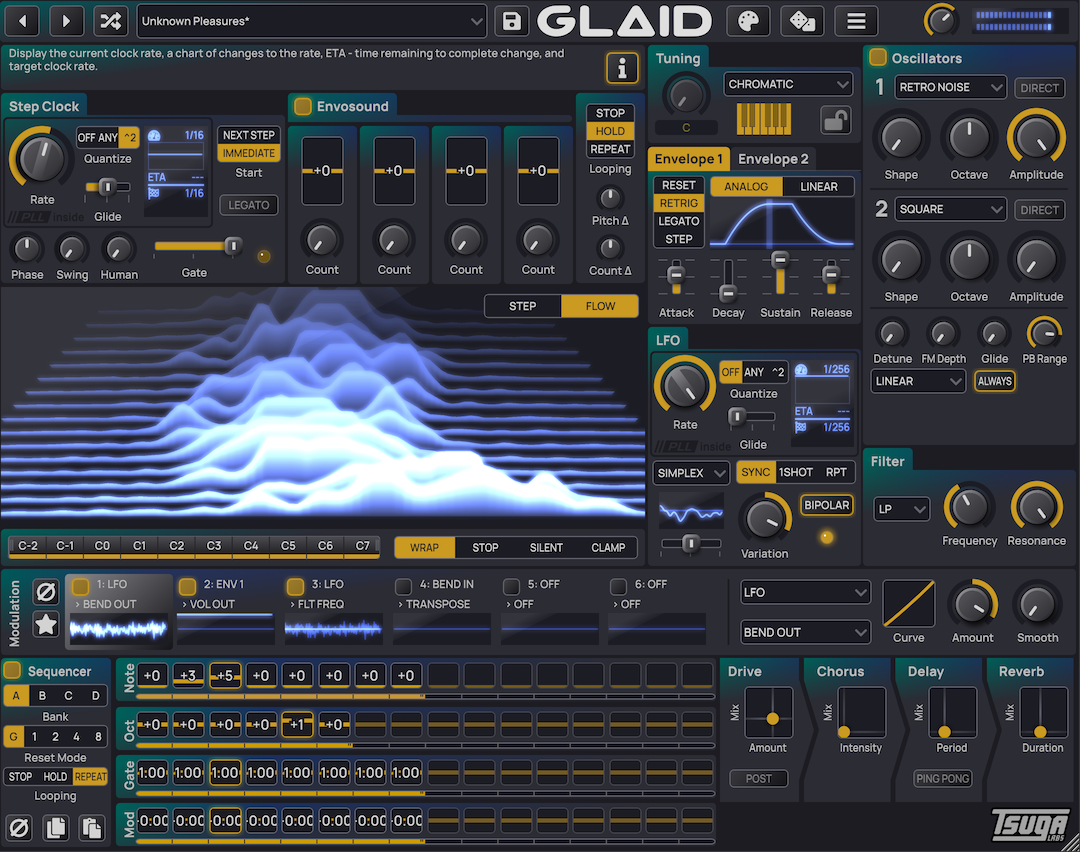
Glaid is a new kind of instrument: a fusion of synthesis, sequencing, and arpeggiation that takes inspiration from 80s gaming hardware while pushing far beyond its limits. It captures the nostalgic character of digitally controlled analog synths and transforms it into something bold, modern, and endlessly shapeable.
With its relativistic arpeggiator, beat-locked gliding clock, and deep modulation architecture, Glaid lets you morph simple notes into evolving harmonic patterns, animated textures, and entirely new sonic identities. Glaid leads you into sonic territory you’ve never explored.
Relativistic arpeggiator
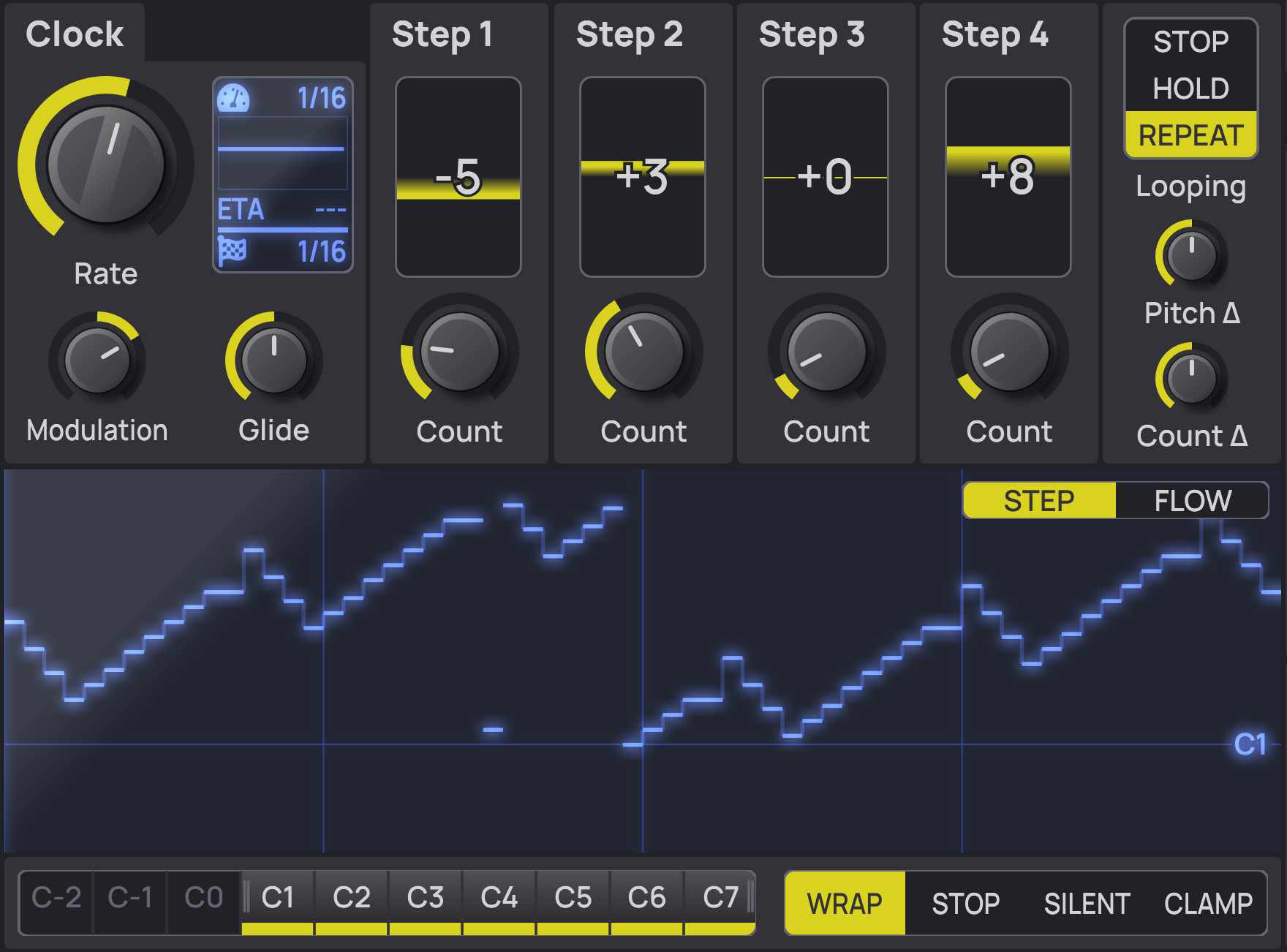
Originating from early game technology where it created complex sounds from simple hardware, the relativistic arp lets you create anything from crazy bleeps to arpeggiations and glissandos while staying in the key and scale you choose.
The relativistic arp is unique in that it operates with intervals rather than absolute notes. This means it can create sequences utterly different from what you might expect from traditional arpeggiators. By manipulating intervals and scales, you can create progressions that evolve in unexpected ways, taking your music in exciting new directions.
Beat-locked gliding clock
Glaid/Envosound boasts a unique beat-locked clock feature that remains perfectly synced to the beat, even when modulated at different speeds. This clock smoothly glides to the desired rate, effortlessly transitioning from slower to faster tempos over multiple bars. For example, you could slow the clock from 1/128 to 1/4 over two bars, with the clock transitioning to the new tempo perfectly in time with each 4/4 beat. This allows you to experiment with tempo changes and other rhythmic effects while keeping your music flawlessly in sync and on the beat.
MIDI synthesis
With Glaid, you can drive external synthesizers or the internal oscillators. The rich sequencing, arpeggiation, and modulation can generate MIDI events rather than an audio stream. Modulations can be assigned to output MIDI CCs and other aspects, such as note velocity, pitch bend and more.

Modulation
MIDI inputs and internal sources, such as the envelope generators and LFO, combine to provide modulation sources. Take control and modulate almost all aspects of Glaid. You can configure the modulation slots to smooth changes and apply a response curve.
Step Sequencer
In addition to the Relativistic arpeggiator, Glaid contains a traditional step sequencer. It features note and octave offset lanes, a gate control lane, and a freely assignable modulation lane. The sequencer has many options for tweaking, with variable lane lengths for polyrhythms, control over when position resets occur, and its repeat behaviour when reaching the end of a lane.
Oscillator Section
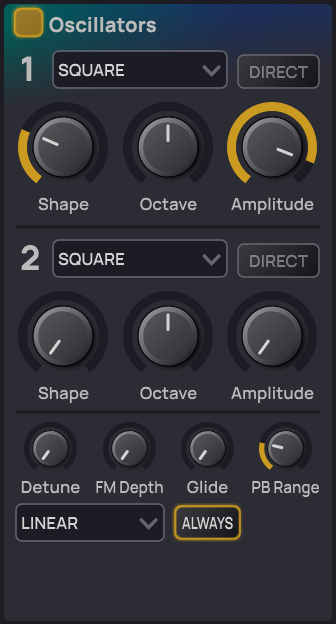
Glaid features an upgraded dual oscillator section with individual gain and tuning. The oscillators will cross-modulate, and three modulation modes replicate analog and digital approaches. Apply portamento for smooth glides between notes.
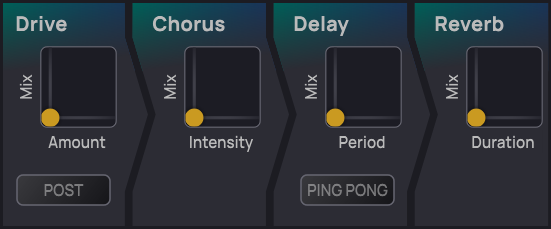
The upgraded effects chain has additions of drive and a classic dimension-style chorus. The effects are not an afterthought but an intrinsic part of the sonic palette being modulatable, including send and tail controls.
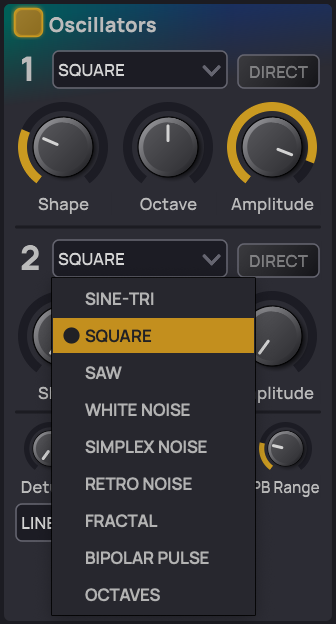
More Features
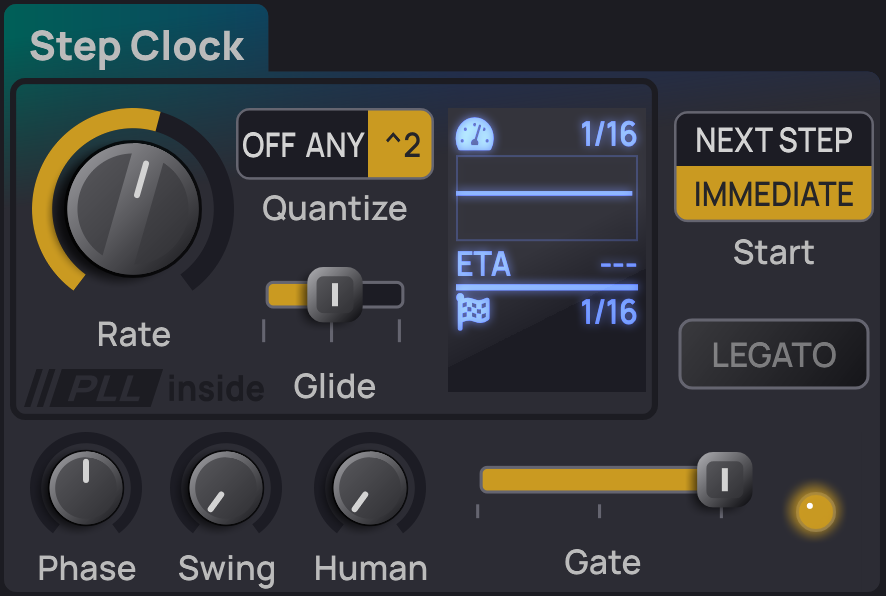
Deeper control of all aspects of sound generation.
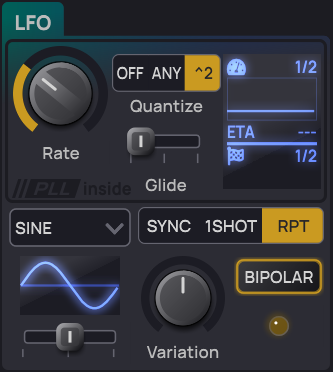
LFO with beat-locked gliding modulation
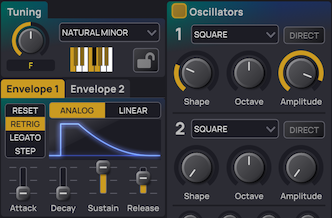
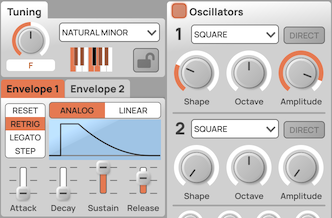
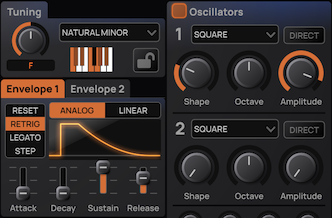
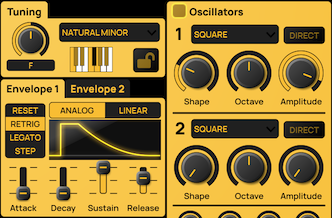
Fully scalable, with more themes.
Vast set of 100+ presets
Preset Previews
No external processing applied except where noted.